


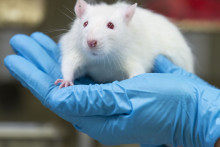
A total of 454 laboratory animals were used for research under UT’s licence in 2025. The 372 mice and 82 rats were used in studies into cancer, stomach, liver and intestinal diseases, and disorders of the nervous system.
This is a 15 percent decrease in the number of laboratory animals compared with the previous year. The decline is expected to continue sharply in 2026. As part of the reorganisation of the Faculty of TNW, UT closed its own animal testing facility at the end of last year. Two of the three UT researchers who used laboratory animals in their research were made redundant as part of the reorganisation.
Replacement, reduction, refinement
Since then, UT researchers who still wish to conduct animal experiments have had to turn to external partners, such as the Central Animal Laboratory in Nijmegen. It is likely that only a handful of researchers are involved, as hardly any UT researchers still use laboratory animals.
The annual report was discussed at the University Council on Wednesday morning. Council members expected this to be the last annual report on animal testing to come before them. However, council member Wilma Dierkes expressed the hope that UT would continue to pay attention to the issue, particularly when it comes to the ‘replacement, reduction, and refinement’ of animal testing. Chair of the Executive Board Gregor Halff said that attention to animal welfare would not diminish and that another report would indeed be produced.
Figures on animal testing in the Netherlands
With 372 mice and 82 rats, UT is by no means a major user of laboratory animals, according to national figures. To put this into perspective, the latest available figures date from 2024. That year, 423,970 animal experiments were conducted in the Netherlands. Other universities do not report just a few hundred laboratory animals, but in some cases tens of thousands. Animal experiments are mainly conducted using rodents, such as mice and rats.